Yes, you can sketch at MoMA, the Metropolitan Museum of Art, and the National Gallery of Art, but the materials you pack matter. Their published rules differ on colored pencils and sketchbook dimensions, so permission at one institution does not establish permission at another.
The museums’ official visitor guidance, current as of October 23, 2026 KST, provides a starting point for choosing supplies. This guide compares their rules and offers a few drawing ideas. General visitor policies do not settle drawing conditions for every temporary exhibition or unusually busy period.
Compare the rules before packing
At MoMA, the visitor FAQ permits sketching or writing with pencil and sets a maximum sketchbook size of 8.5 × 11 inches. Its separate visitor policy excludes colored pencils, crayons, and markers, along with paint and adhesives. A colored-pencil set therefore needs a different destination among these options.
The Met’s guidelines allow pencil for writing, drawing, and notes, while excluding paint, charcoal, and markers. The page gives no sketchbook size limit. That silence does not mean every size is permitted; check with the museum if your book is unusually large.
The National Gallery’s policy explicitly welcomes lead or colored pencil and allows sketchbooks measuring 12 × 17 inches or smaller. It prohibits artmaking materials including glue, epoxy, and paint. Its colored-pencil allowance is a useful distinction for visitors choosing where to draw.
Build a compact graphite kit
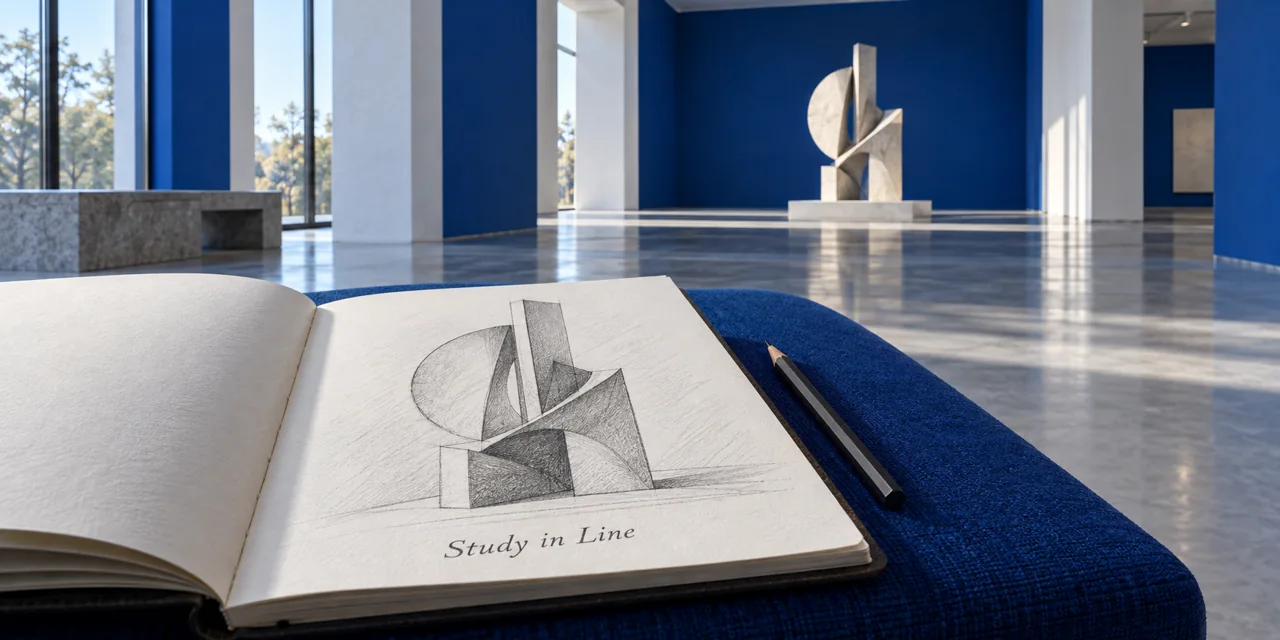
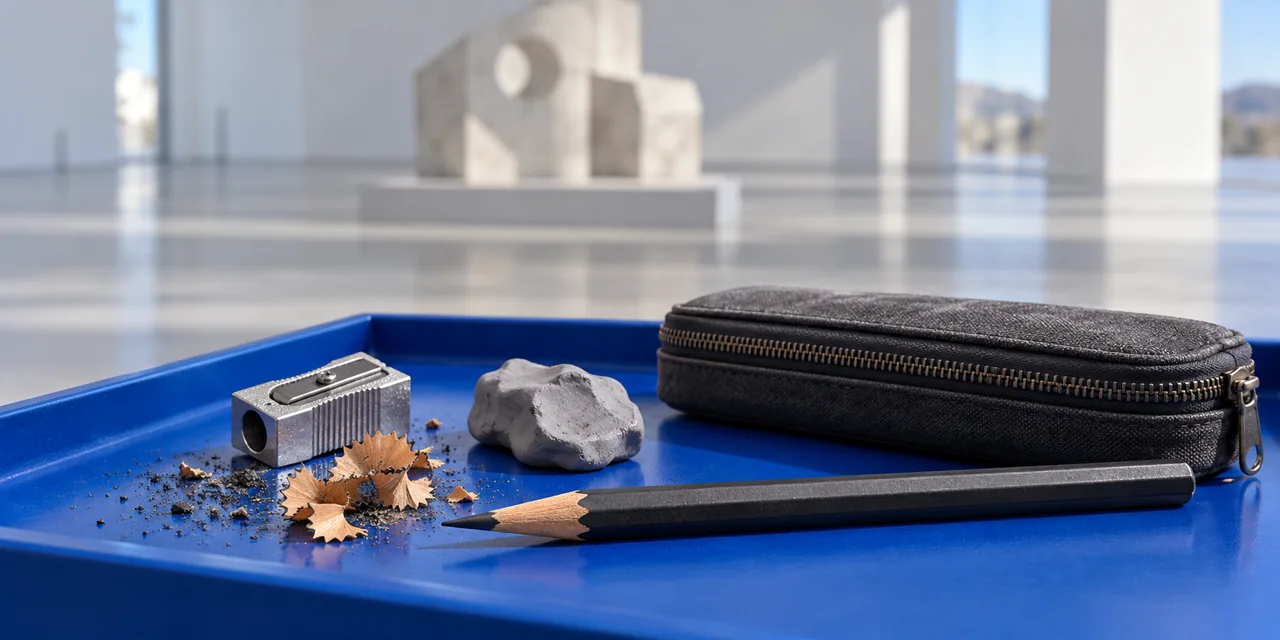
Our conservative recommendation across these three museums is an ordinary graphite pencil and a sketchbook no larger than 8.5 × 11 inches. This is an editorial packing choice based on their published rules, rather than a shared policy issued by the museums.
Start with the marks you want to make, then match your supplies to the destination. If color matters, the National Gallery provides an explicit option. If you already own a larger book, verify its suitability before bringing it. Do not assume permission for pencil extends to another medium.
A smaller page can also help you set a realistic task. Leave space around a single detail instead of trying to fill the sheet with an entire room. You can decide before arriving whether you want one sustained sketch or several brief studies; either approach gives the visit a manageable focus.
Give yourself one small drawing task
MoMA’s published drawing itinerary suggests exploring line weight, hatching, cross-hatching, texture, scale, and perspective. It also proposes breaking a sculpture into shapes and rearranging them.
Choose one concern to begin: follow an outline with your eyes, compare two shapes, or vary the weight of a few lines. A finished picture need not be the goal.
The itinerary offers drawing prompts, rather than a scheduled class. Choose a subject from what is on view instead of planning around a particular artwork’s availability.
Leave room for the art and other visitors
The National Gallery specifically asks visitors to stay at least two feet from art and to avoid touching works or display cases, according to its guidelines. That distance belongs to its policy, not a universal measurement for every museum.
As practical advice, keep walkways usable and follow staff directions. If crowding or an exhibition setting makes drawing uncertain, ask before settling in. A general visitor page cannot resolve every situation you may encounter.
Choose your visit around your materials
Use the museum’s current rules as the final packing check: material first, book dimensions second. A compact graphite kit is the simplest recommendation supported by this comparison. For another way to structure your attention, see Museum Audio Guide or Slow Looking: Which Comes First?