Spoiler warning: This review discusses the Stranger Things series finale.
The short answer: After years of monsters, secret laboratories and world-ending stakes, Stranger Things chooses the right final subject: a group of friends accepting that childhood cannot be saved in exactly the form they remember it.
The finale’s most important door is not a supernatural gate. It is the Wheeler basement door Mike closes after the group’s final Dungeons & Dragons campaign. The gesture is simple, almost ordinary, and that is what gives it weight. A series that began with children disappearing into a nightmare ends by letting them leave the room on their own terms.
The last campaign brings the story home
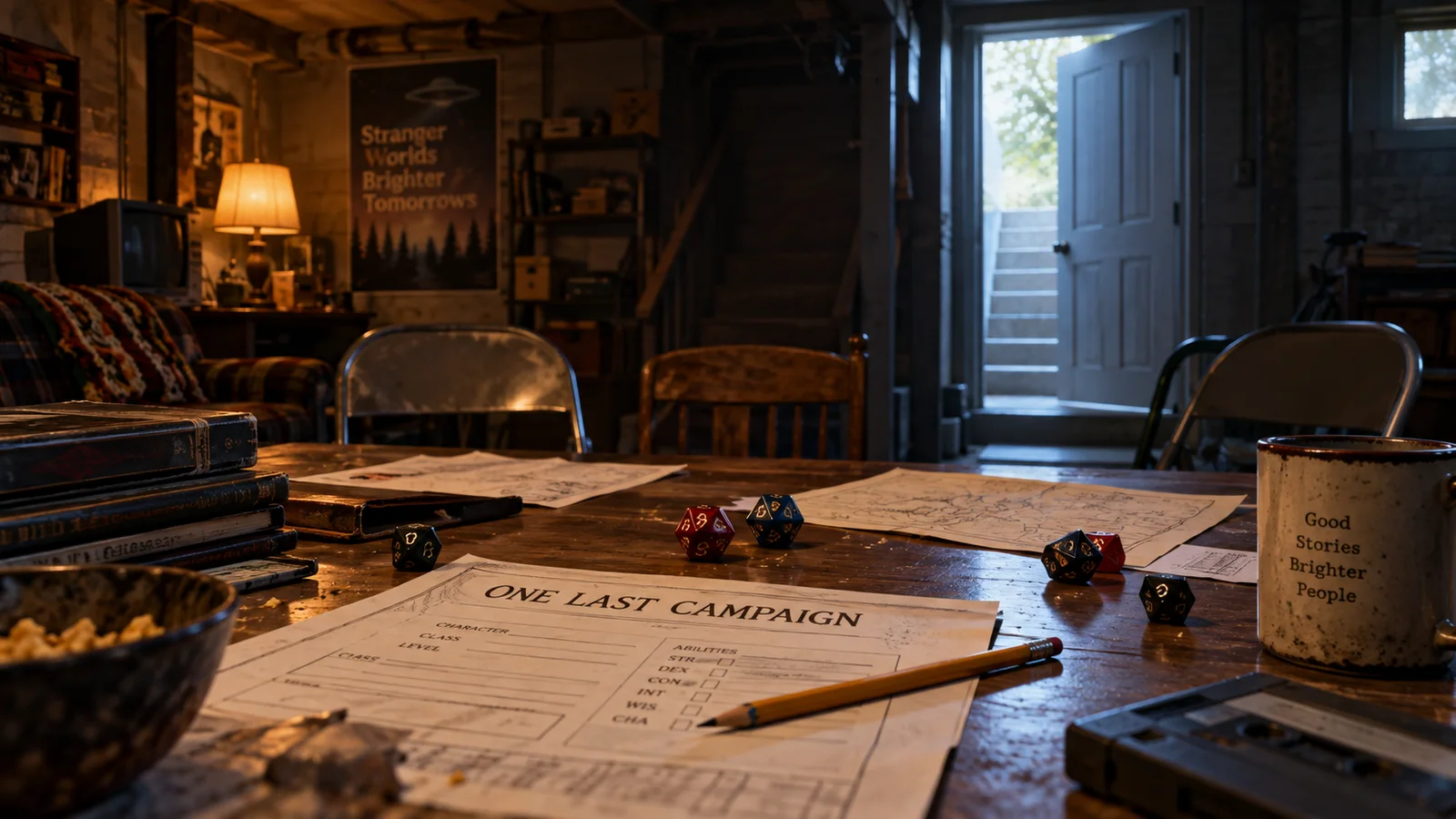
The tabletop game has always been more than nostalgic decoration. In Season 1, it gave the boys a language for dangers adults could not understand. Its monsters offered names for the otherwise unthinkable. Returning to the table in the finale allows the series to honor that imaginative vocabulary without pretending the characters can remain children forever.
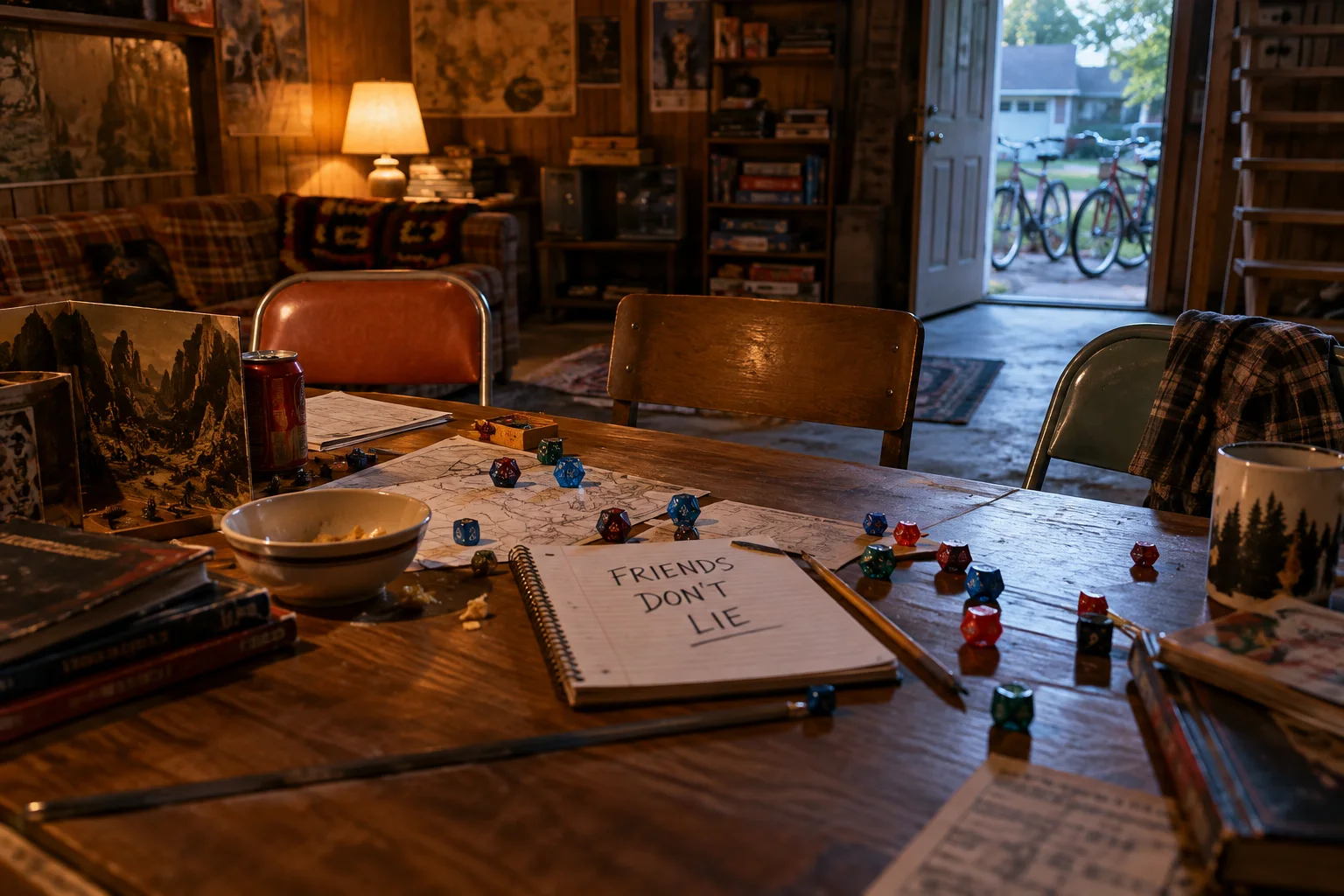
Netflix’s official interview with creators Matt and Ross Duffer says the brothers had long planned a closed door as the final image. They describe the ending as the group saying goodbye to childhood. That intention is visible in the scene’s lack of spectacle. The emotion comes from accumulated memory: dice, arguments, basement steps and the knowledge that this configuration of friends will never exist in quite the same way again.
The sequence works because it does not announce itself as a farewell speech. The characters play. They finish. They leave. Mike closes the door. Viewers supply the history.
Why a quiet ending fits a huge series
A blockbuster finale is expected to answer mythology questions and complete action arcs. Stranger Things does that work, but its reputation has never rested only on the Upside Down. The show became a phenomenon because its horror had domestic scale: a missing child’s bedroom, Christmas lights on a wall, bicycles on a dark road, a mother who refused to stop looking.
The closing scene returns to that scale. Instead of trying to outgrow its beginnings, the series recognizes that the basement was always its emotional center. The supernatural story gave the characters reasons to fight; the ordinary room gave them a reason to belong.
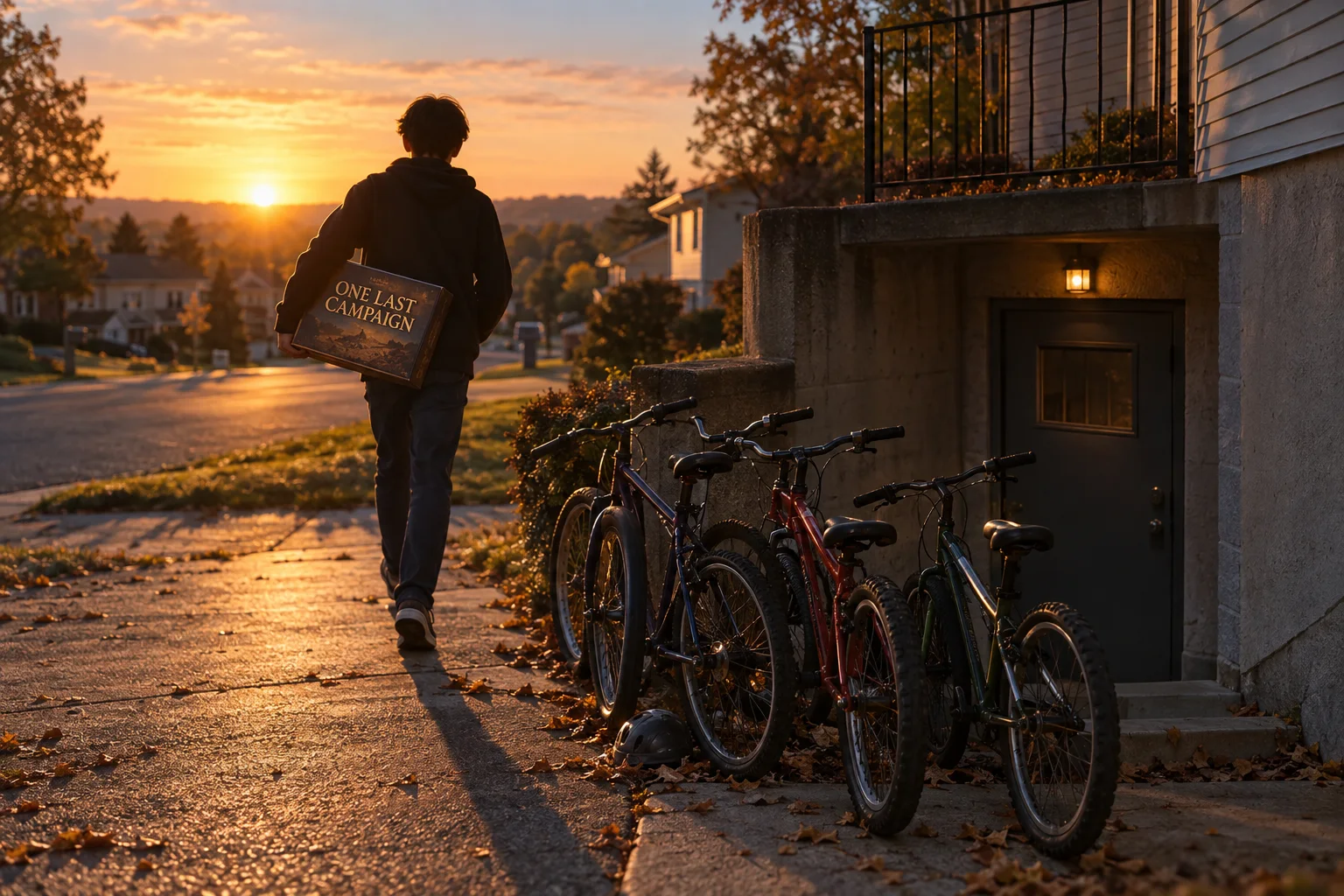
This choice also avoids the trap of treating adulthood as a reward. Moving forward is not presented as a victory over childhood. It is a loss as well as a release. The friends carry the campaign with them, but the room cannot remain frozen for their return.
The ending’s real measure of hope
Hope in Stranger Things has rarely meant certainty. It has meant choosing to reach for someone through static, darkness or grief. The finale keeps that definition. The characters do not receive a future without scars; they receive a future that is still open.
That distinction matters for a series so invested in resurrection, memory and second chances. A weaker ending might have tried to restore Hawkins and its heroes to an untouched version of normal. The final chapter understands that repair is not erasure. Growing up means living with what happened without allowing it to become the only thing that can happen next.
Final verdict
The series finale earns its emotion by stepping away from scale at the right moment. Whatever viewers debate about the mythology, the last image identifies the story’s true subject with precision. Stranger Things was about friends using imagination to face terror — and eventually learning when to put the dice down.
Verdict: a tender, confident farewell whose quiet final gesture carries more power than another explosion could.
Sources
- Netflix Tudum: The Duffer Brothers on the Stranger Things Series Finale (January 2, 2026)