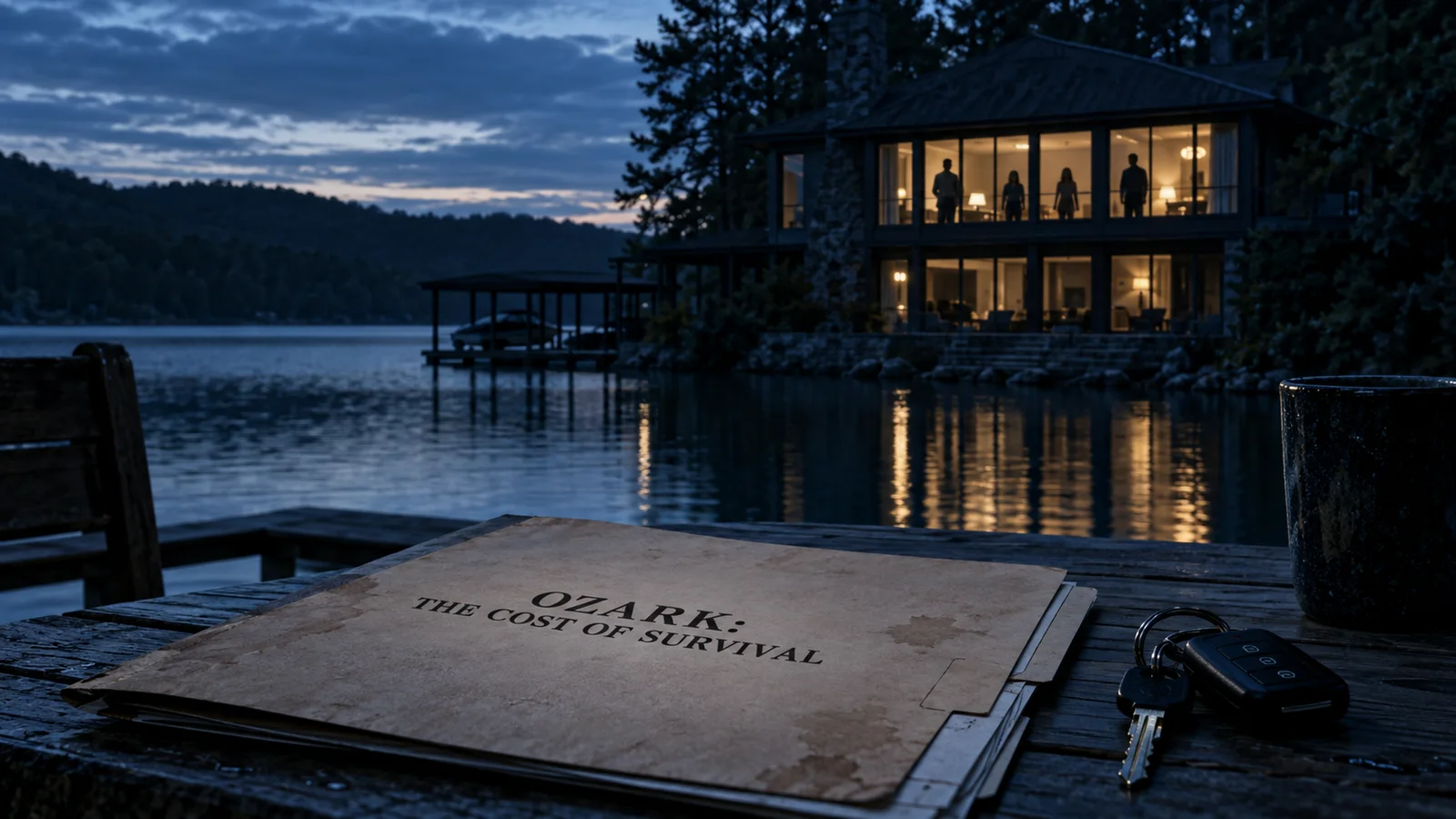
Spoiler warning: This review reveals the ending of Ozark.
The short answer: The Ozark finale is frustrating by design. The Byrdes do not escape because they have become better people; they survive because money, access and political usefulness have made consequences negotiable.
“A Hard Way to Go” spends much of its running time teasing the moral reckoning viewers expect. Ruth Langmore’s future finally looks possible. Marty and Wendy are exhausted enough to imagine leaving. The family’s car crash, shown at the season’s beginning, suggests fate is waiting. Yet the finale repeatedly removes those exits until one fact remains: the Byrdes are not trapped outside the system. They have become part of it.
Ruth’s death changes the meaning of survival
Ruth’s murder is the finale’s hardest choice because she has done what the Byrdes rarely manage: she has pictured a life that is not merely the next emergency. Julia Garner gives Ruth’s final scene a weary clarity. She understands the danger and refuses to perform fear for Camila. Her condemnation of Camila is also a refusal to pretend the cartel operates by rules that can still save her.

Her death is not satisfying, but satisfaction is not the point. Ruth pays for a killing the Byrdes helped make imaginable, while the people who turned her home into a criminal enterprise gain legitimacy. The imbalance is the series’ argument in its most brutal form.
Showrunner Chris Mundy told Netflix Tudum that the ending was intended as a statement about capitalism and power in America. He wanted viewers to feel the thrill of the family surviving and then question why they were cheering. That tension explains why a conventional punishment would have been emotionally cleaner but thematically weaker.
Jonah’s final shot is the real ending
Mel Sattem’s return appears to offer the accountability the story has withheld. He has Ben’s ashes, an explanation, and the confidence that the Byrdes cannot buy their way out of every truth. Wendy’s reply — that the world does not work that way — is not a defense. It is the family sentence the whole series has been building toward.
Then Jonah appears with the shotgun. The character who once rebelled against Wendy’s manipulation now protects the family’s shared lie. The screen cuts to black after the shot, but the victim is less important than the choice. Jonah is no longer merely damaged by the family business; he is participating in its preservation.
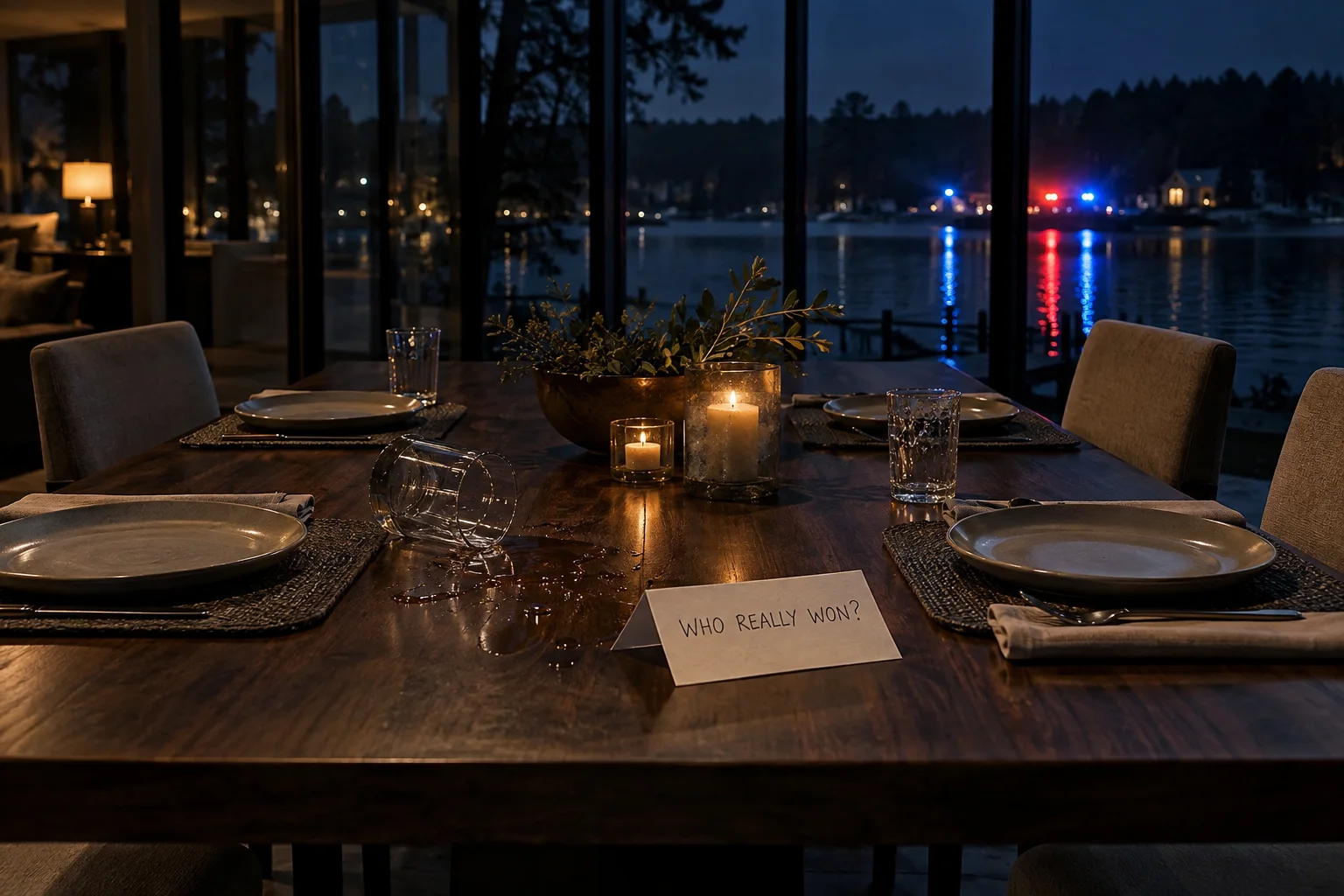
That is why the final scene should not be read as a sudden twist. Across the series, Jonah’s intelligence and anger make him vulnerable to the same fantasy that drives his parents: the belief that seeing corruption clearly prevents you from becoming corrupt. The finale destroys that comfort.
Why the car crash was not a promise of punishment
The crash frustrates viewers because television has taught us to treat a flash-forward accident as a debt that must eventually be paid. In Ozark, the family emerging alive serves a different function. It reunites them. Wendy’s vulnerability after the crash pulls the children back toward their parents, turning random survival into emotional leverage.
The scene also strips away the idea that fate will do the moral work other institutions cannot. The Byrdes survive the road, the cartel, law enforcement and their own betrayals. Their escape is not proof of innocence. It is proof that survival and justice have almost nothing to do with each other in this world.
Final verdict
Ozark ends without catharsis, and its coldness can feel punishing. On rewatch, however, the finale is consistent with the show’s darkest insight. The Byrdes have spent four seasons converting danger into influence. By the end, they no longer need to run. Power has learned their names.
Verdict: an intentionally bitter finale whose lack of justice is its central idea, not an oversight.