Handbags did not simply replace women’s pockets. The museum examples discussed here show overlapping ways to carry belongings, with changing silhouettes affecting where storage could fit. A pocket could be a separate accessory; a bag could make carrying visible. The useful distinction is less about which came first than how clothing distributes weight, space, and attention.
A pocket could be separate from the dress
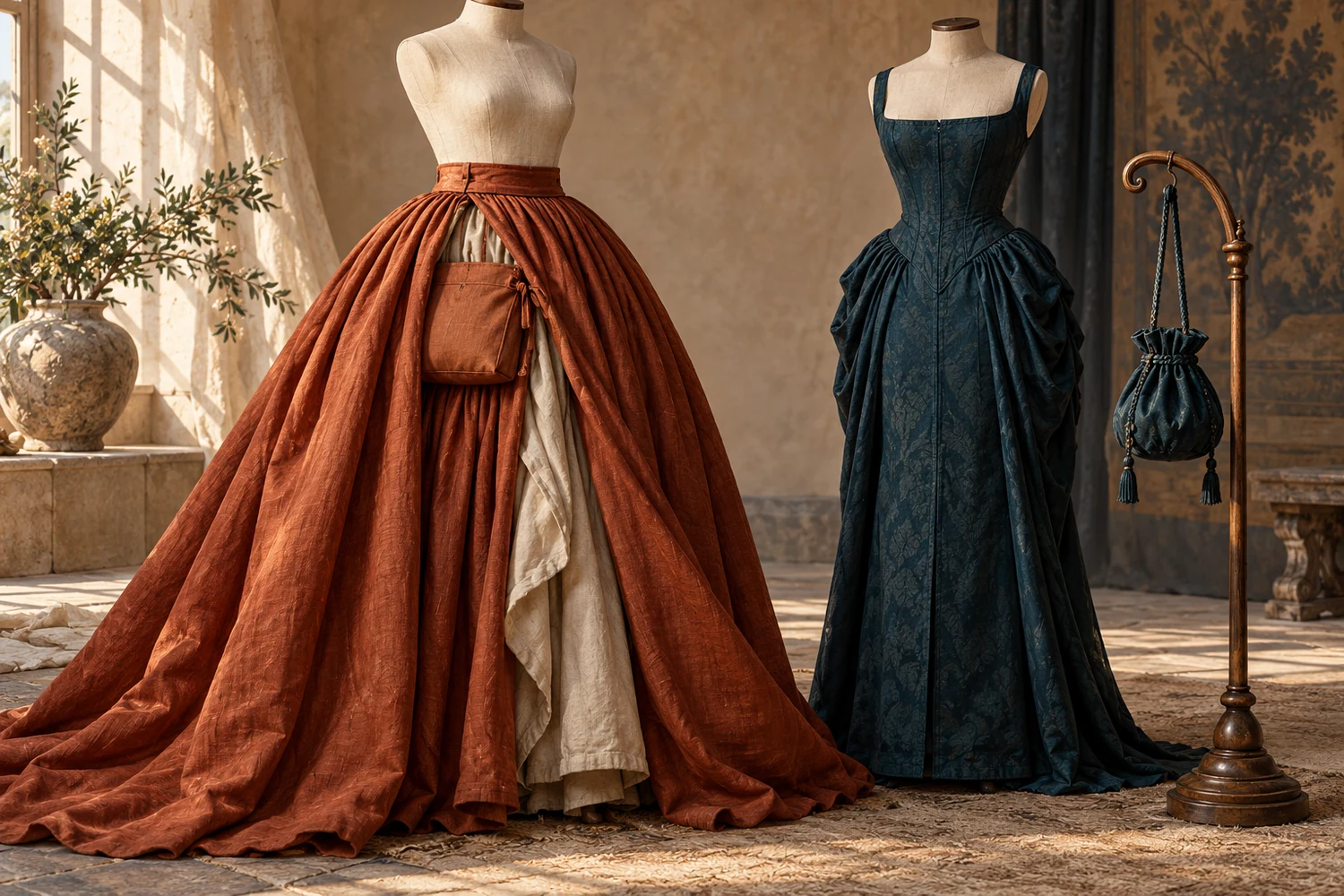
The Victoria and Albert Museum explains that tie-on pockets fastened around the waist and were reached through openings in dresses or petticoats. Its largely European account places their common use from about 1650 through the nineteenth century, while acknowledging gaps in surviving garments.
An American cotton-and-wool pocket dated about 1784 at the Met makes that arrangement tangible. The museum lists keys, thimbles, handkerchiefs, spectacles, and coins among pocket contents. Its floral decoration also complicates any neat division between useful storage and ornament: something concealed could still receive decorative attention.
For a contemporary reader, the conceptual shift matters. Storage did not have to be sewn permanently into the garment to belong to an outfit. Thinking of the pocket as equipment changes how we understand the dress around it.
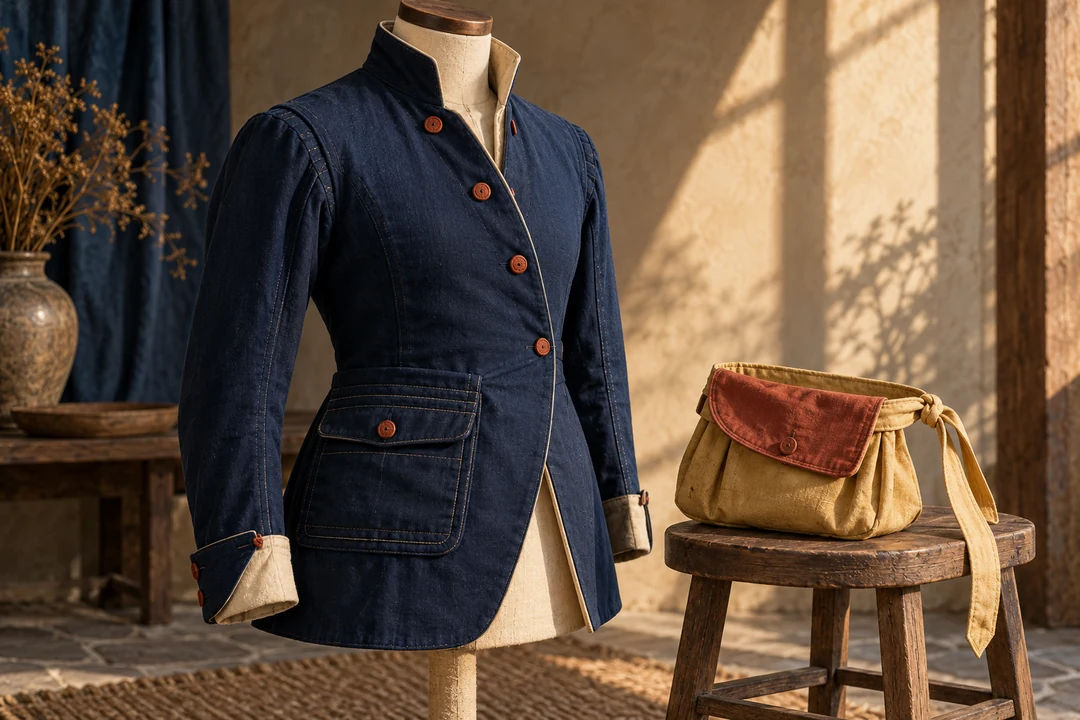
A narrower silhouette changed the problem
In FIT’s online exhibition, narrower early-nineteenth-century silhouettes could no longer conceal separate pockets beneath skirts; small wrist-carried reticules offered an alternative. A French example dated around 1800 was made from an eighteenth-century man’s waistcoat.
That object suggests a more interesting interpretation than a simple march toward the modern handbag: material once used for clothing became a container carried beside it. Storage moved into view.
This is a design tradeoff, rather than proof that every wearer welcomed or followed the same change. A narrow outline leaves less room for concealed bulk. Moving belongings outside the garment can preserve that outline, but it also gives the wearer another object to manage. The museum’s selected objects cannot establish everyone’s preferences.
Coexistence challenges the replacement story
The V&A’s Lady Clapham doll, dated 1690–1700, has a tie-on pocket, integrated petticoat pockets, and a separate drawstring gaming bag. One miniature wardrobe cannot represent all women, but it clearly resists a tidy pockets-then-bags sequence.
My reading is that the replacement story asks too much of a single category. “Carrying belongings” includes different tasks: keeping something close, reaching it discreetly, organizing small objects, or making an accessory part of an appearance. Those purposes need not produce one winning design. Several containers can make sense within the same wardrobe, even when their capacities overlap.
Visible storage can shape an outfit
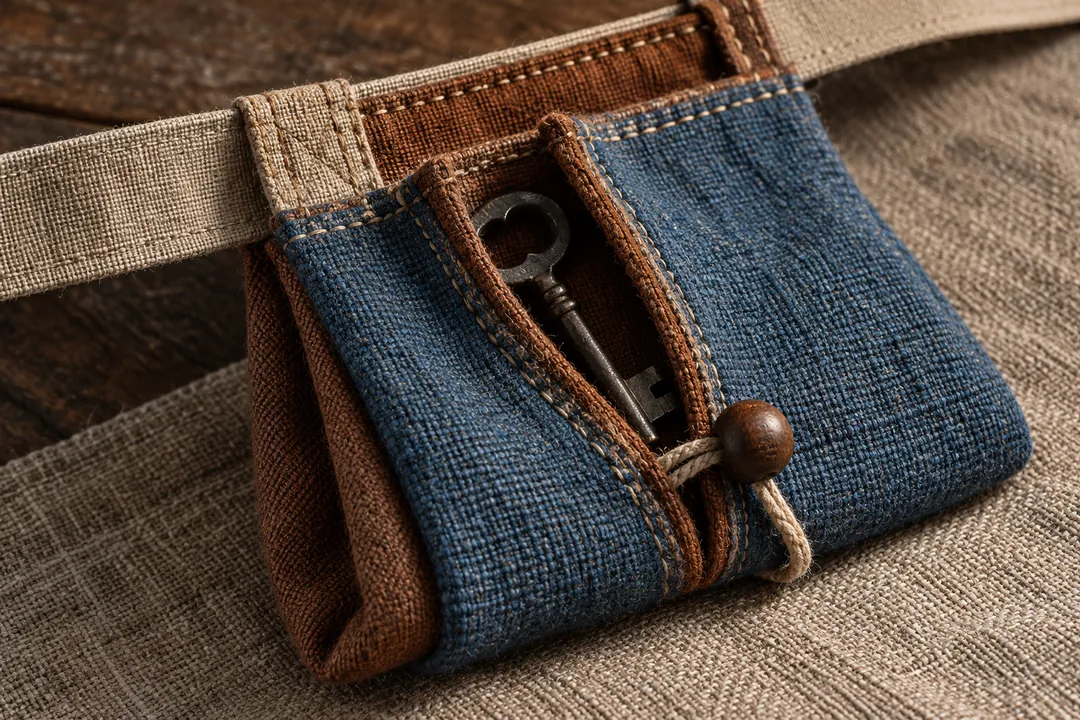
The Museum at FIT’s 2018 exhibition account describes selected twentieth-century designs in which women’s pockets serve as decoration or help shape a silhouette, alongside their storage function. A visible pocket therefore need not be merely a concession to practicality.
Among its selected objects, FIT’s online exhibition displays a circa-1925 evening bag alongside a matching cigarette case, cosmetic compact, and coin purse.
That observation offers a useful way to look at clothes now. A pocket opening can direct the eye; its placement can emphasize a line. Yet visual presence does not tell you whether the pocket will accommodate your belongings. Equally, a bag’s decorative role does not cancel its usefulness. Appearance and capacity are separate questions worth asking together.
Choose storage by the job it needs to do
As practical guidance, start with what you actually carry. Check whether an opening admits your hand comfortably, whether the contents stay secure, and whether their weight changes the garment’s drape. Consider access while seated as well as standing.
Then ask what you want the outfit to look like when loaded. If a clean line matters, a separate bag may be a deliberate choice. If keeping your hands free matters more, usable garment pockets deserve priority. Historical examples do not dictate that decision. They help reveal the decision itself: storage is part of how an outfit works and how it presents you.
Sources
- Women’s tie-on pockets — Victoria and Albert Museum — checked October 21, 2026.
- Pockets to Purses: Fashion + Function — The Museum at FIT — checked October 21, 2026.
- Pockets to Purses: Fashion + Function — FIT online exhibition — checked October 21, 2026.
- Pocket, American, ca. 1784 — The Metropolitan Museum of Art — checked October 21, 2026.