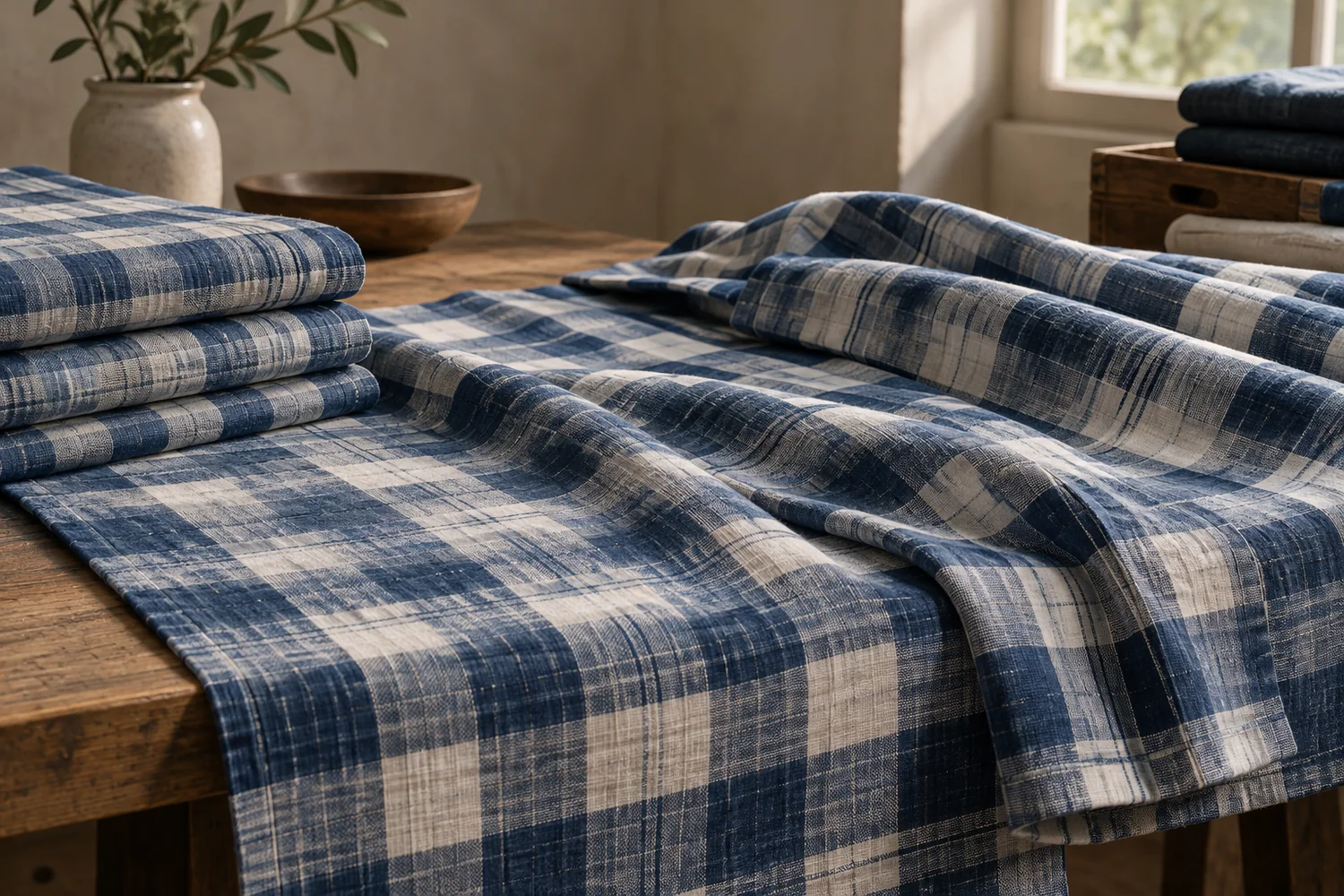
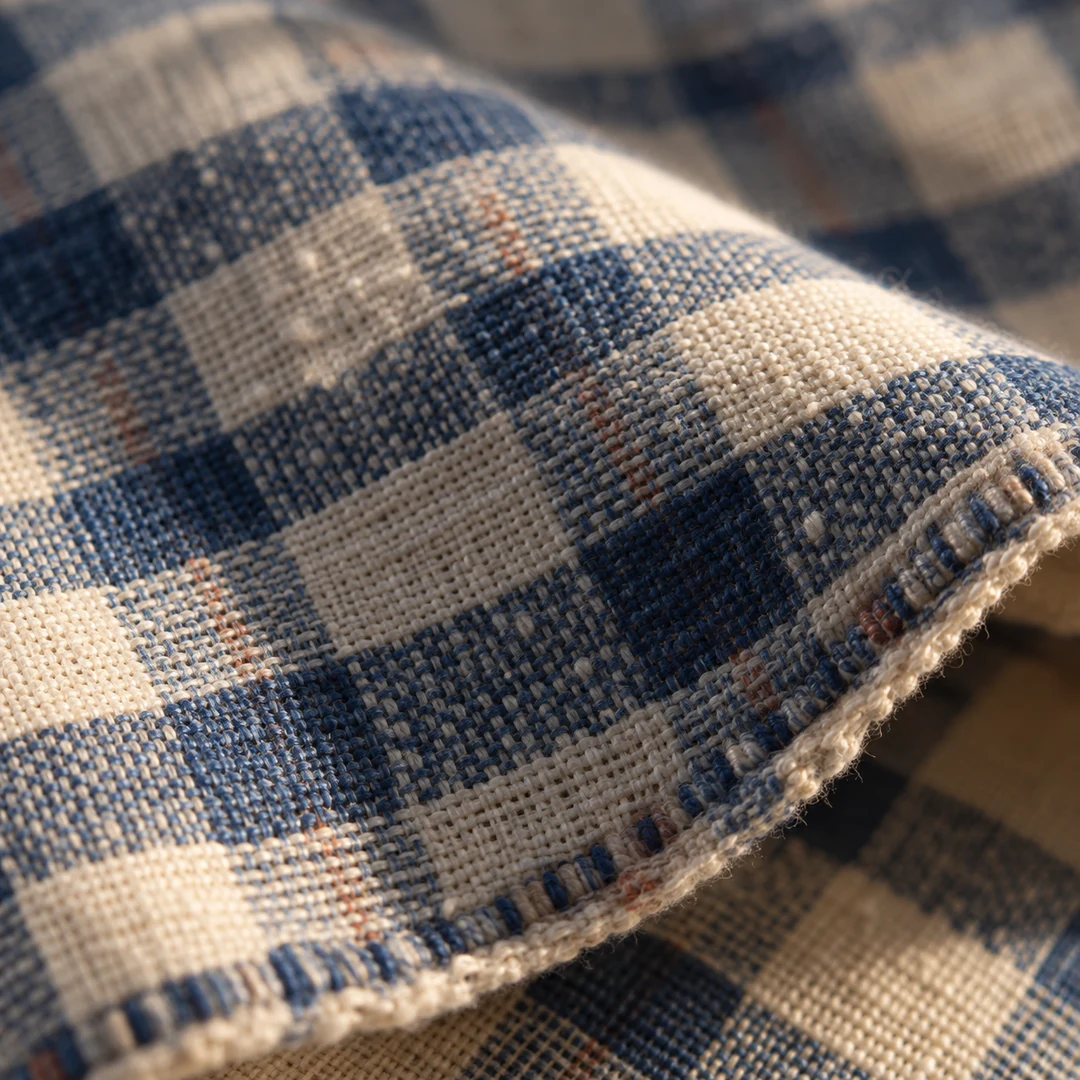
Palaka is a durable checked fabric associated with Hawaiʻi’s workwear history and later expressions of local style. Its significance developed through use, community memory, and design—not simply through the place where the cloth originated. Seeing the pattern today means recognizing those layers while leaving room for different relationships to them. A check can carry a history without telling us everything about the person wearing it.
A local history with uncertain beginnings
The University of Hawaiʻi at Mānoa’s account preserves uncertainty about palaka’s beginnings: its name is believed to come from “frock,” and its original cotton cloth likely came from New England. The university describes dense fabric used for plantation work and says the blue-and-white check appealed to Japanese immigrant workers.
Those qualifications matter. An imported material can become deeply associated with a place through the lives built around it. Local significance does not require a tidy invention story. Workwear also brings a different starting point to fashion history: the garment’s practical role belongs in the discussion alongside its appearance.
That does not make plantation experience a single shared story. The university’s account identifies a particular connection; it should not become a substitute for every worker’s experience. Reading palaka carefully means keeping the documented association visible without making it stand for an entire population.
When a work pattern becomes a statement
The same university report describes later changes in palaka’s colors and an 1980s Palaka Power movement expressing pride among descendants of Japanese plantation laborers. That is a specific account of community identification, rather than evidence that everyone in Hawaiʻi understood the pattern alike.
The distinction changes how we discuss clothing as a cultural symbol. A recognizable pattern may connect generations, but recognition and agreement are different things. Calling palaka a symbol of local pride can be useful when we identify whose pride, in which context, and through what history.
It also keeps the visual pleasure of the check from swallowing its social background. Fashion can make an old work pattern newly desirable; desirability alone does not explain the meaning it acquired. The more useful question is how a garment’s working past remains present when its purpose or audience changes.
Palaka and alohawear can overlap
A 2025 UH Hilo exhibition included a navy-blue palaka aloha shirt among garments from UH Mānoa’s Historic Fashion Collection. Professor Andrew Reilly and graduate student Terri-Lee Bixby curated the collection presented in the exhibition. The listed shirt gives a concrete example of palaka appearing within alohawear.
Te Papa’s collection record provides another: a cotton Palaka Shirt made in Hawaiʻi in 2017 is classified under aloha shirts. The museum describes co-collecting with University of Hawaiʻi cultural specialist Noelle Kahanu, with attention to how Hawaiian culture has been represented and misrepresented through aloha shirts.
These records establish overlap in particular garments. They do not make the terms interchangeable. Palaka identifies the checked textile tradition under discussion; an aloha-shirt classification places a specific object within another clothing category. Holding both descriptions together helps us see more than a familiar shirt shape.
What a changed check can tell us
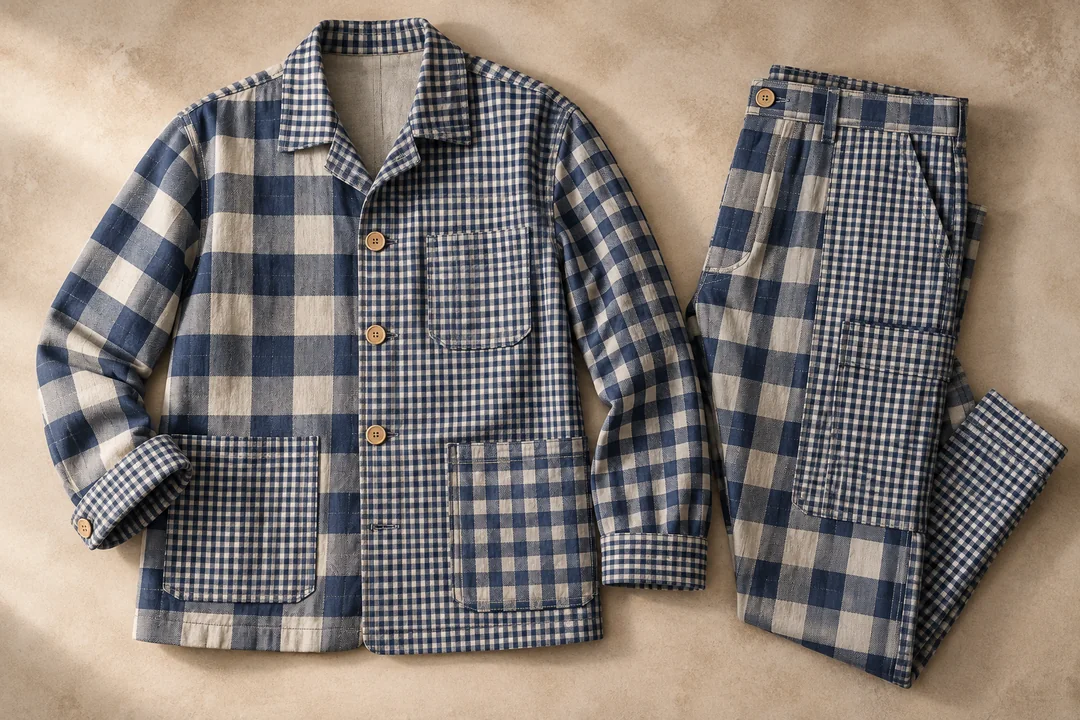
The Mānoa report describes contemporary designers experimenting with color, the scale of the check, and diagonal cutting. Those choices give the pattern a continuing design life.
Each offers a different way to read a familiar surface. A larger check changes the relationship between pattern and silhouette. A diagonal orientation makes the grid appear less settled. A new color can shift the first impression before a viewer knows anything about the cloth’s history. These are visual possibilities, not proof that a redesign produces one predictable cultural response.
For someone encountering palaka today, material, garment form, historical context, and present-day design are useful things to consider together. Neither imported origins nor contemporary experimentation cancels its local associations. Equally, those associations cannot tell us a wearer’s identity or politics. The pattern becomes more interesting when its history sharpens our attention instead of closing interpretation down.
Sources
- University of Hawaiʻi at Mānoa News: The denim of Hawaiʻi: How palaka weaves together history, modern style — posted September 29, 2025; checked October 15, 2026.
- UH Hilo Stories: UH Hilo hosts exhibition of select alohawear from UH Mānoa’s Historic Fashion Collection — posted August 1, 2025; page displays an update date of June 1, 2026; checked October 15, 2026.
- Museum of New Zealand Te Papa Tongarewa: Palaka Shirt — undated collection record; acquired during a 2017 field collection in Hawaiʻi; checked October 15, 2026.