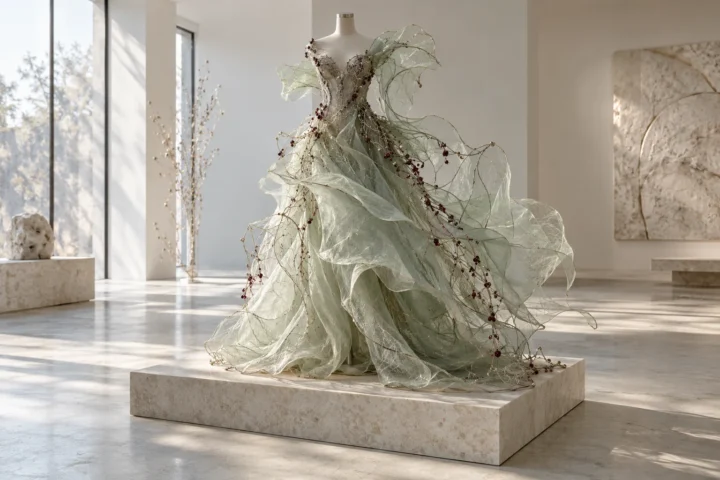
A bias-cut dress gets part of its fluidity from the direction in which its fabric is cut. A stretch-fabric dress can achieve a related silhouette through the cloth’s elastic structure. Those descriptions answer different questions: one concerns the placement of garment pieces, the other the behavior of the textile. Two museum dresses, by Madeleine Vionnet and Elsa Schiaparelli, show why a similar body-skimming appearance does not necessarily reveal how a garment was made.
What the diagonal changes
In a Museum at the Fashion Institute of Technology conservation transcript, a conservator explains bias cutting as cutting garment pieces at a 45-degree angle to the fabric’s grain. Discussing a woven dress, the conservator describes how its cloth stretches more off-grain, allowing a more fluid silhouette.
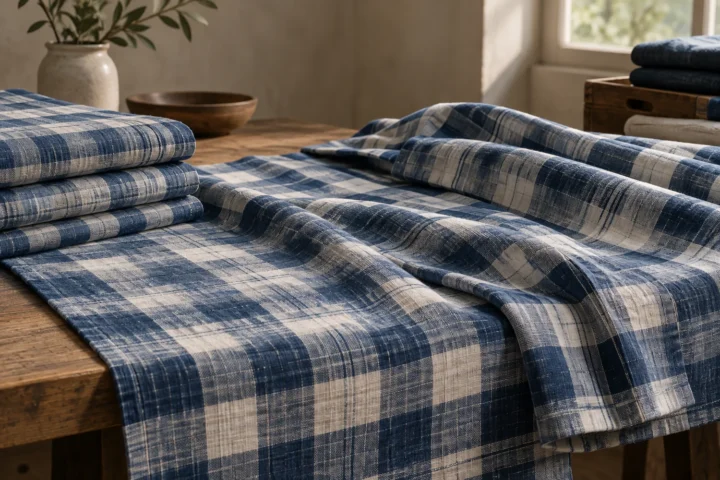
The distinction is easier to understand if you think about direction before shape. A woven grid gives the maker a reference for positioning each pattern piece. Turning that piece diagonally changes the relationship between the cloth’s structure and the garment it becomes. In the plaid dress discussed by the FIT conservator, the pattern consequently runs diagonally.
That plaid provides a visible clue in this particular example. It does not establish a universal test for every dress: a solid fabric offers no comparable pattern to follow, and a garment’s appearance alone may leave its construction unclear. The useful question is how the pieces sit relative to the grain.
Vionnet made the cut part of the design
The Met’s House of Vionnet evening dress from fall/winter 1929–30, designed by Madeleine Vionnet, makes the consequences of that choice specific. The museum describes black chiffon cut on the bias, with bias-cut satin ruffles on the train. According to its record, those ruffles retain bounce instead of flattening as straight-cut ruffles would.
The train matters because it moves the discussion beyond whether a dress follows the body. Here, cutting direction also helps determine the character of a decorative element. The ruffles are part of the garment’s shape and rhythm; their behavior shows how a construction decision can become an expressive detail.
FIT’s archived account of the bias cut connects Vionnet’s bias-draped soft crepes with flowing 1930s styles and describes her influence on designers in Paris, New York, and Hollywood. That supports understanding her contribution as an influential use of the technique. It does not establish that she invented bias cutting. The page accompanies an exhibition held in 2014, rather than an ongoing show.
Schiaparelli reached a related silhouette through cloth
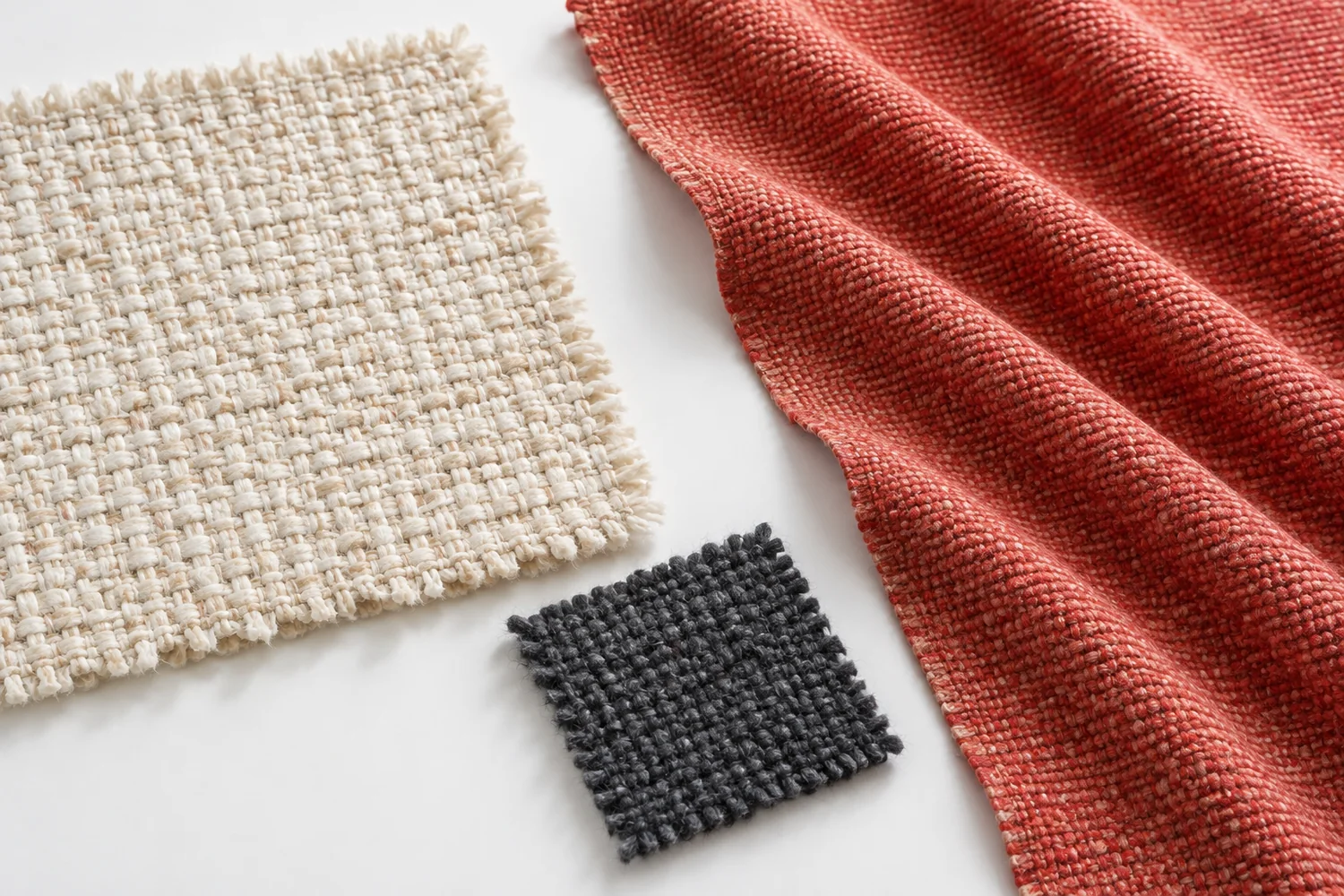
A 1934 Schiaparelli dinner dress at The Met offers a revealing comparison. Its record describes woven stretch cloth made with high-twist yarn and a crimped, heat-pressed surface. The museum says the cloth mimics the body-conscious fit of a bias dress, while attributing this gown’s fit to the textile’s elastic structure.
That is a different source of the effect. In the Vionnet example, the record draws attention to diagonal cutting and the behavior it produces. In the Schiaparelli example, it identifies elasticity within the cloth. The resemblance between the silhouettes makes the difference more interesting: looking at the outline is only the beginning of understanding the design.
Schiaparelli’s dress also prevents an easy category mistake. Stretch cloth can be woven, as this object demonstrates. The example does not explain every elastic textile, and the comparison does not require every bias-cut garment to be made from non-stretch cloth. Cut direction and textile elasticity describe separate characteristics that need separate evidence.
Read the construction before judging the silhouette
When a dress is described as fluid or body-skimming, look for information about grain direction and fabric structure. A collection record can explain a distinction that a photograph leaves unresolved. Neither label, by itself, guarantees comfort, a particular fit, or how the garment will move on a particular wearer.
These two dresses reward that closer reading. Vionnet’s ruffles make the diagonal grain an active design choice; Schiaparelli’s woven stretch cloth creates a related effect through the material itself. Understanding the mechanism gives the visible shape another dimension: the decisions that made it possible.
Sources
Source pages checked October 9, 2026. Garment dates identify the historical objects.