The most useful way to see “Paris Couture” is to look beyond the finished silhouette. When the exhibition opens at the Minneapolis Institute of Art (Mia) on October 4, its garments will offer different ways to read a design: embroidery that pulls the eye, embellishment that changes a surface, and fabric shaped into a striking form. Three pieces from Schiaparelli, Dior, and Balenciaga make a good starting point. Together, they suggest that couture’s story lives as much in a garment’s details as in the name on its label.
A century of couture, seen up close
Mia’s exhibition listing describes more than 80 haute couture garments from Paris’s Palais Galliera, spanning the late 19th century to the present. “Paris Couture” is scheduled for October 4, 2026, through January 17, 2027, in Mia’s Target Galleries. The exhibition is conceived by Palais Galliera with Mia and the Saint Louis Art Museum, where it is scheduled to travel next year.
Mia frames the show around couture’s theatrical origins, its mid-century high point, and its continuing reinvention. Across that timeline, visitors can compare how designers use decoration, material, and volume.
The Schiaparelli cape: follow the embroidery
Start with Elsa Schiaparelli’s shocking-pink evening cape from 1938. According to Mia’s account of the exhibition, Maison Lesage embroidered its back with a sunburst design in sequins and gold thread. The cape was made for Daisy Fellowes, an editor at Harper’s Bazaar.
The back is the detail to keep in mind. A sunburst placed there asks the viewer to consider how a garment changes as someone turns away. The vivid color gives the cape an immediate presence; the embroidery rewards a second look. Its connection to Fellowes gives the object a human context, while its surface tells a design story of its own.
Dior’s “Palmyre”: when the surface becomes the event
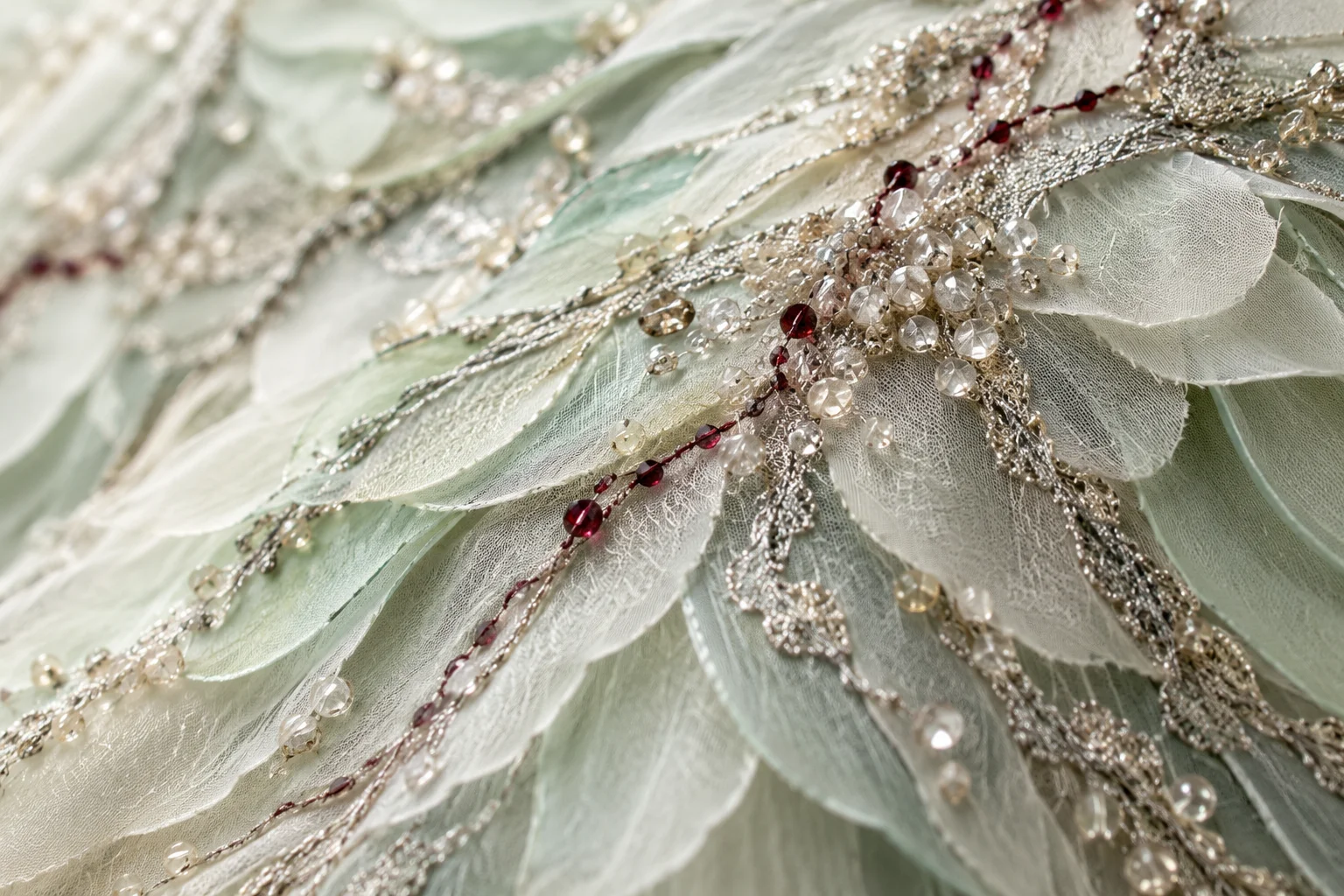
Christian Dior’s “Palmyre” dress, from 1952, offers another way to consider ornament. Mia identifies it as a dress commissioned and worn by Wallis Simpson, embellished with sequins, pearls, and crystals. These are concrete details, and they make the dress worth examining beyond its association with a well-known wearer.
Sequins, pearls, and crystals each meet light differently. Together, they can make the surface feel varied before a viewer takes in the full shape. Where does the decoration direct attention, and how does it affect the impression of the dress as a whole? “Palmyre” shows why a photograph of a complete outfit may leave out much of what makes it interesting.
Balenciaga’s 1967 ensemble: read the shape first
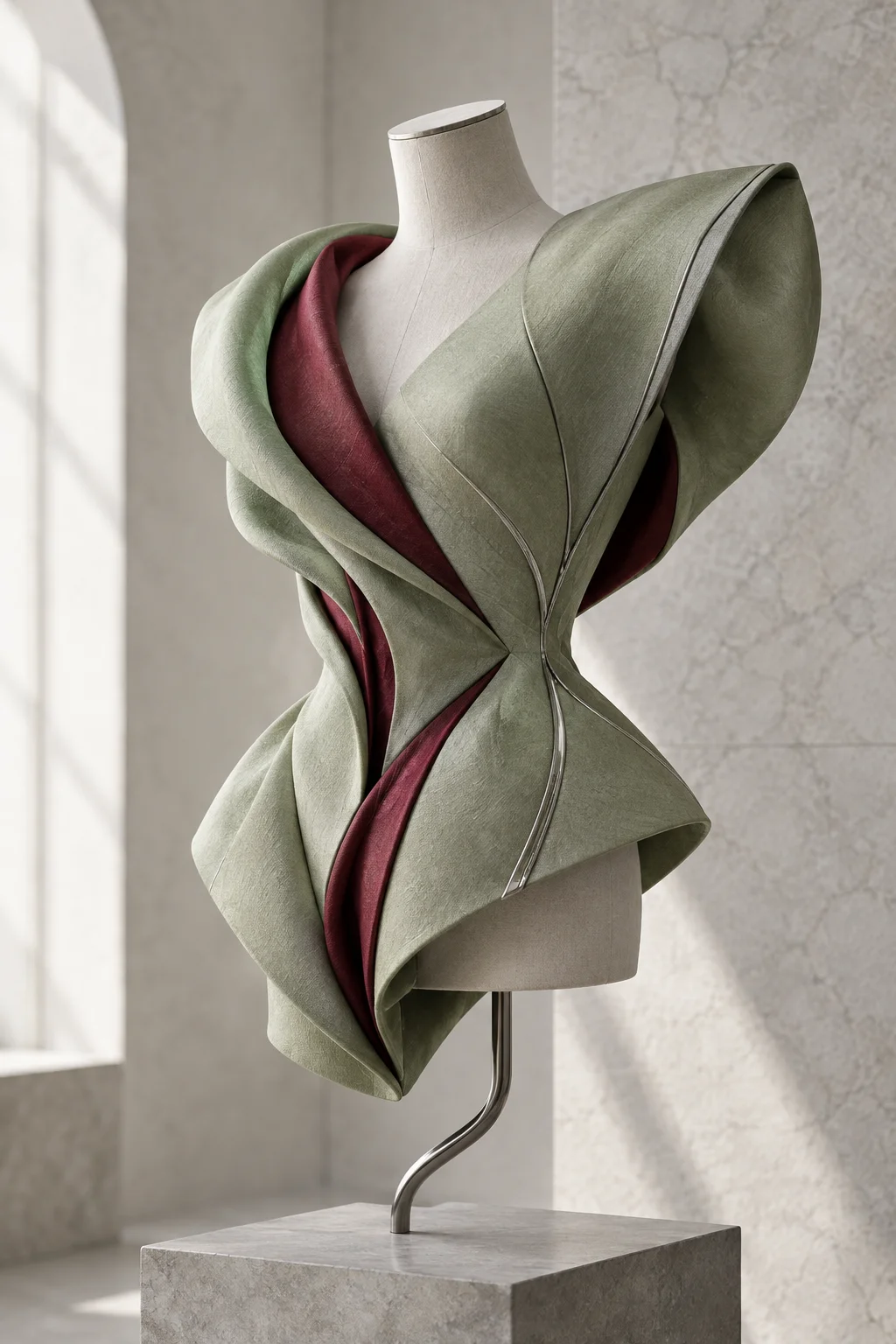
A sculptural ensemble by Cristóbal Balenciaga from 1967 shifts the focus from ornament to form. Mia highlights its gazar fabric and pronounced shape and texture. That description suggests a different viewing strategy: begin with the outline, then look at how the fabric gives that outline its presence.
Where the Schiaparelli cape directs attention to embroidered imagery and “Palmyre” to a decorated surface, this ensemble invites the eye to trace volume and edge. Fabric can do more than provide a background for decoration; it can define the whole visual proposition. The three pieces show a range of approaches without making any one garment stand for all of couture.
A history that reaches Spring 2026
The show does not stop with its historic pieces. Mia’s press release also identifies a Spring 2026 couture look associated with Matthieu Blazy and Gabrielle Chanel’s design legacy. That recent work gives visitors a reason to compare across time rather than think of the exhibition as a sealed archive.
Does a recent garment draw attention first through its outline, its surface, or the relationship between the two? The older examples offer ways to look without prescribing a single answer. Placing a 2026 look within that span makes Mia’s theme of reinvention tangible.
Make time for a second look
Mia lists public tours and a free digital guide for the exhibition. Either could help a visitor move from recognizing a designer’s name to noticing a particular design decision. Even without a guided route, it is worth returning to one object after seeing the others: the cape’s embroidered back, the changing surface of “Palmyre,” or the shape of Balenciaga’s ensemble may register differently once there is something to compare.
“Paris Couture” is scheduled to run at Mia in Minneapolis from October 4, 2026, through January 17, 2027. Go with a small set of questions rather than a list of labels to collect. Where does your eye land first? What material or detail holds it there? And how does that choice help the garment communicate an idea? Those questions are a way to see the exhibition’s long history through the clothes themselves.