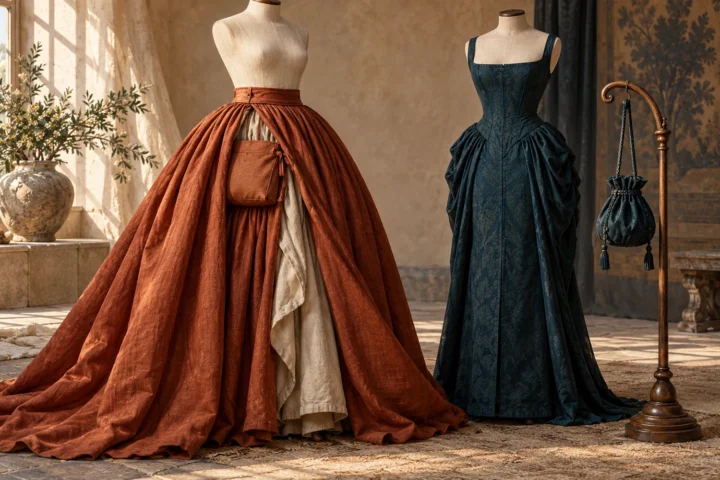
A seasonal closet rotation presents a practical question: which clothes belong on hangers, and which need a shelf? Our cautious household reading of conservation guidance is to give knits and vulnerable garments flat support, while reserving hanging for sound, structured pieces with adequately supported shoulders.
That is a sorting principle, not a guarantee for every sweater or jacket. The sources behind it concern textile preservation, largely in collections, rather than tests of modern wardrobes.
Start with support, not garment labels
The Canadian Conservation Institute explains that textiles differ in fiber, construction, dyes, finishes, and decoration. Flexible materials can lose shape or develop persistent creases without adequate support, according to its guidance revised in 2024. A garment name alone therefore cannot settle the storage question.
For a household wardrobe, our practical inference is to consider what will carry the garment’s weight while it waits to be worn. A jacket with sound shoulders presents a different decision from a stretchy knit or a piece whose decoration adds weight. Storage becomes another way of responding to construction, alongside the choices made when wearing the garment.

Give vulnerable pieces flat support
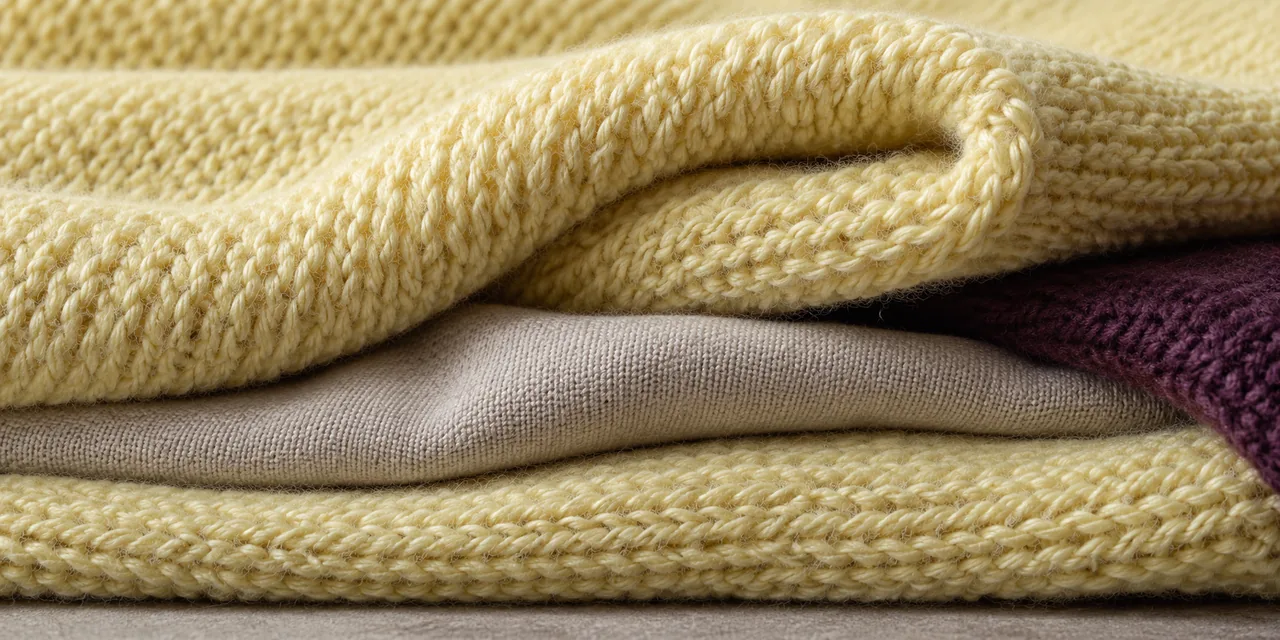
CCI’s flat-storage note explains the benefit directly: supporting the whole textile frees its fibers from carrying its own weight. Its examples include stretchy knits, fragile textiles, heavily decorated pieces, and garments with weak shoulder seams.
For seasonal sorting, we would put those pieces first in line for available flat space. But flat storage and folding are not identical. The same note acknowledges the space requirement and recommends keeping folds to a minimum. Its latest listed revision is 2008; it addresses collection storage, not the interval between everyday wears.
The useful household takeaway is to treat folding as a space compromise. Consider how much folding a delicate piece would require before assuming a drawer answers every support problem.
Hang sound garments with shoulder support
CCI’s hanging-storage note allows hanging for structurally sound costumes. It says lightweight wire hangers provide inadequate support and explains that its padded museum hanger spreads weight across the shoulder area.
Our household application is to assess the garment and hanger together. A sound, structured piece is a candidate for hanging when the hanger follows and supports its shoulders. A narrow hanger should not become the default simply because it fits on the rail.
The note was last revised in 2009. It supplies a support principle, not comparative testing of today’s consumer hangers. Its detailed museum construction methods need not become a shopping checklist for an ordinary closet.
Make the storage conditions count
The hanger-or-shelf decision does not cover the whole job. CCI’s basic-care guidance, dated November 14, 2018, recommends keeping textiles clean and dry in a cool, dark, dry location with ventilation. It cautions that dry-cleaner plastic bags can permit moisture buildup and offer no protection from light.
That makes a clear cleaner’s bag an inadequate long-term protection plan under this guidance. Cleaning methods require a separate decision: collection-care instructions should not be transferred wholesale to contemporary clothes. These sources also do not establish how quickly damage might occur in a particular home.
Use condition as the deciding question
Before putting a piece away, ask whether it stretches, carries substantial decoration, or has shoulders you would hesitate to load. Our editorial recommendation is to prioritize support for those vulnerable areas rather than sort solely by clothing category.
Icon’s collection-care guidance, dated 2006, corroborates flat storage for fragile or heavily decorated garments and recommends a conservator when materials or condition are uncertain. That is particularly useful when a valued piece falls outside routine wardrobe care.
For the related question of how construction shapes clothing during wear, see Bias Cut vs. Stretch: How a Dress Gets Its Drape. Here, the decision is what support that garment needs afterward.
Sources
- Canadian Conservation Institute: Caring for textiles and costumes. Originally published 2018; revised 2024.
- Canadian Conservation Institute: Basic care — Textiles. Dated November 14, 2018.
- CCI Notes 13/2: Flat Storage for Textiles. Originally published 1986; revised 1993 and 2008.
- CCI Notes 13/5: Hanging Storage for Costumes. Originally published 1983; revised 1994 and 2009.
- Icon: Costume and textiles. Guidance dated 2006.
All five sources were checked October 27, 2026, KST. Their collection-care guidance informs the household applications identified above; none tests current consumer storage products.